
Share
What is an Affiliate Program? Definition, Examples & How It Works
A
Affiliate marketing is a performance-based strategy where individuals or companies earn commissions by promoting products or services. It connects merchants with a wider audience without requiring upfront advertising costs.
Today, understanding “What is an affiliate program?” is more relevant than ever. Businesses can attract new customers efficiently, while affiliates have opportunities to earn flexible income on their own schedules. In the United States alone, billions of dollars are spent annually through affiliate channels. This highlights its role as a critical path for growth and revenue.
Affiliate programs also help businesses scale without the risks of traditional advertising. Instead of paying for ads that may not convert, companies only reward affiliates for actual sales, clicks, or leads. For content creators, affiliate marketing turns blogs, social media accounts, and email lists into income-generating assets.
Understanding how affiliate programs work can empower both businesses and affiliates to maximize their returns.
What is an Affiliate Program?
At its core, an affiliate program is a structured system where businesses pay external partners to promote their products or services. These partners, called affiliates or publishers, earn a commission when they generate sales, leads, or traffic for the merchant. The system is simple but highly effective.
Merchants set clear guidelines such as commission rates, cookie durations, approved marketing channels, and promotional rules. Affiliates then create content to promote the products, such as blog posts, videos, social media posts, and email campaigns. The goal is to match the right product with the right audience.
Affiliates may promote products in different ways. Some write in-depth reviews or tutorials. Others focus on social media promotion, email newsletters, or paid traffic campaigns. A well-designed affiliate program benefits both parties: the business gets more exposure and sales, while affiliates earn income based on their marketing efforts.
“What is an Affiliate Program?” also in practice means a clear workflow and measurable results. Modern programs use affiliate networks or software to track clicks, sales, and commissions. These platforms make sure that affiliates are credited accurately and merchants can monitor ROI. This transparency is one reason affiliate marketing has grown into a multi-billion-dollar industry.
How Does an Affiliate Program Work?
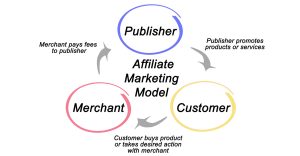
Affiliate programs operate as a cycle connecting merchants, affiliates, and customers. The process is straightforward but includes several steps.
- Merchant chooses affiliates: Businesses select affiliates who align with their target audience. For example, Amazon Associates recruits bloggers and YouTubers who write product reviews. Shopify merchants may target niche influencers to promote online stores.
- Affiliate promotes products: Affiliates share affiliate links on blogs, YouTube channels, social media, or email campaigns. They may create guides, tutorials, or comparison articles that naturally include links.
- Customer clicks and buys: Shoppers click the affiliate link and complete a purchase on the merchant’s site. Cookies track these interactions to maintain proper attribution.
- Tracking and commission: Affiliate networks or software track the sale. Merchants confirm the purchase, and affiliates earn a commission, often a percentage of the sale or a fixed fee.
For example, a tech blogger writes a detailed review of a new laptop on their website. A reader clicks the affiliate link to Amazon and makes a purchase. Amazon automatically credits the blogger with a percentage of the sale. Similarly, Shopify stores may recruit social media influencers to showcase new products, expanding reach globally.
Affiliate marketing platforms like ShareASale, CJ, or Rakuten Advertising automate tracking, reporting, and payment. These systems simplify program management for businesses and help affiliates focus on promotion.
Types of Affiliate Programs
Affiliate programs vary depending on how affiliates are compensated. Understanding the types can help both businesses and individuals choose the right strategy.
- Pay-Per-Sale (PPS): Affiliates earn a commission only when a sale occurs. This is the most common model for e-commerce programs. Commission rates can range from 5% to 50%, depending on the product or merchant.
- Pay-Per-Click (PPC): Affiliates earn for every visitor who clicks their affiliate link, regardless of whether a purchase happens. This model works well for high-traffic sites or campaigns designed to drive awareness.
- Pay-Per-Lead (PPL): Affiliates earn when a visitor completes an action, such as signing up for a newsletter, filling out a form, or registering for a trial. PPL is popular among SaaS companies, online services, and educational platforms.
Benefits of Affiliate Programs
For Businesses:
- Drives revenue without upfront advertising costs. Companies pay only for measurable results.
- Expands geographic reach using affiliate networks, tapping into audiences that may be hard to access otherwise.
- Increases brand visibility and credibility through trusted third-party endorsements.
- Tracks ROI easily with affiliate software, allowing optimization of campaigns over time.
For Affiliates:
- Generates flexible income, including passive opportunities through evergreen content.
- Promotes products relevant to their audience, maintaining trust and engagement.
- Builds authority in a niche by providing expert recommendations or useful content.
- Monetizes websites, social media channels, email lists, or other digital platforms without selling products directly.
Examples of Popular Affiliate Programs
- Amazon Associates: One of the largest programs, allowing affiliates to earn on millions of products.
- Commission Junction (CJ): Connects publishers with multiple merchants and provides tracking tools.
- ShareASale: Offers thousands of merchants across industries with easy-to-manage campaigns.
- Rakuten Advertising: Focused on global brand partnerships and diverse marketing channels.
These programs serve as models for businesses launching their own affiliate campaigns. They demonstrate how affiliates can generate income while merchants scale revenue effectively.
How to Start or Join an Affiliate Program
For Businesses:
- Define commission rates and payment structure. Decide between flat fee or percentage.
- Choose permitted marketing channels. Decide if affiliates can use email marketing, landing pages, or social media.
- Select tracking technology. Use affiliate software or network platforms like CJ or ShareASale.
- Recruit affiliates. Target relevant bloggers, influencers, and niche websites.
- Create support content. Banners, guides, and tutorials help affiliates promote effectively.
- Monitor performance. Track sales, traffic, and ROI to optimize campaigns.
For Individuals (Affiliates):
- Choose a niche aligned with your audience.
- Research suitable programs via networks or directly from merchants.
- Sign up for programs and review terms. Check commission rates and cookie durations.
- Create content. Write blog posts, record videos, or build social media campaigns.
- Share affiliate links strategically. Focus on channels your audience engages with.
- Track results. Adjust strategies based on clicks, conversions, and revenue.
Common Questions (FAQ)
How do affiliates get paid?
Affiliates earn commissions on sales, clicks, or leads. Payments are usually monthly or after reaching a minimum threshold. Affiliate networks handle tracking and disbursement, simplifying the process.
Is affiliate marketing legal?
Yes. It’s a regulated form of marketing. Affiliates must disclose relationships and follow FTC guidelines.
Can you really make money?
Yes. Earnings vary by niche, traffic, and promotional strategy. Commissions can range from $20 to $500 per sale. Experienced affiliates, known as super affiliates, can earn five- or six-figure incomes annually.
Do I need my own website?
Not necessarily. Social media, email marketing, YouTube, or other content channels can also drive affiliate revenue.
Which affiliate programs are best for beginners?
Amazon Associates and ShareASale are beginner-friendly. They have easy signup processes and broad product selections.
Conclusion
Affiliate marketing creates a win-win scenario. Merchants scale sales and reach new audiences without upfront costs. Affiliates monetize their platforms while sharing relevant products with their audiences.
By understanding program structures, promotional tactics, and key metrics, anyone can succeed in this fast-growing channel. Start small, track performance, and expand as you gain experience. Whether a business owner or content creator, affiliate marketing offers flexible opportunities to generate meaningful income.
CONNECT TO AN EXPERT
Phone: 424-272-7400
For new partnership and affiliate management inquiries please email:
For General Inquiries please email:
[do_widget “Lightweight Social Icons”]