
State of Affiliate Marketing 2026
Affiliate marketing entered 2026 as a more mature, more concentrated, and more scrutinized channel than in prior years. While overall performance remained resilient, the structure of the ecosystem changed in ways that materially impact how brands and affiliates must operate going forward.
Key findings from the State of Affiliate
Marketing 2026
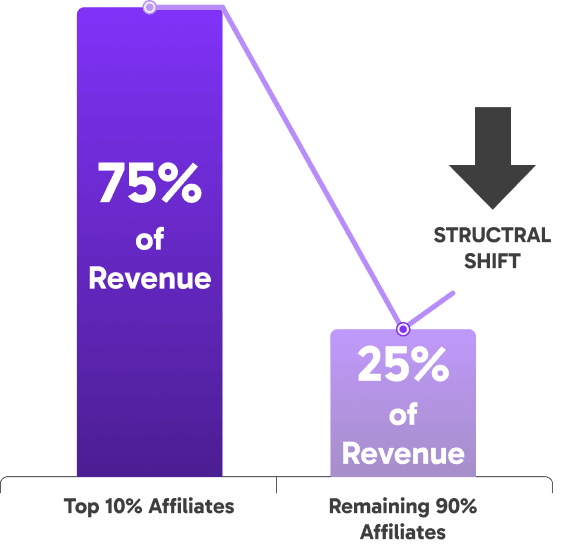
Affiliate marketing performance continued to grow year over year, but revenue became increasingly concentrated among a smaller group of high-performing, trusted partners. Across managed programs, a disproportionate share of revenue was driven by the top tier of affiliates, reinforcing a shift away from volume-based partner models.
Retail remained the dominant affiliate vertical in 2026, accounting for the largest share of affiliate-driven revenue, while telecom, media, and travel maintained steady but slower growth. Vertical performance variability widened, with mature sectors prioritizing efficiency over expansion.
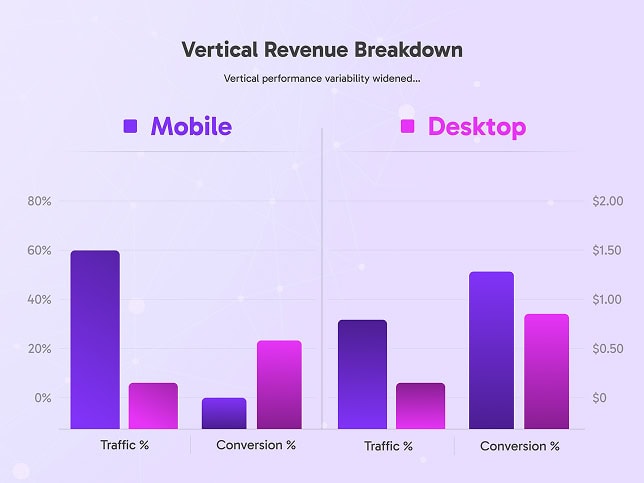
Mobile traffic surpassed desktop as the primary source of affiliate clicks, yet desktop placements continued to deliver stronger conversion rates and higher earnings per click, particularly in late-funnel and loyalty-driven programs.
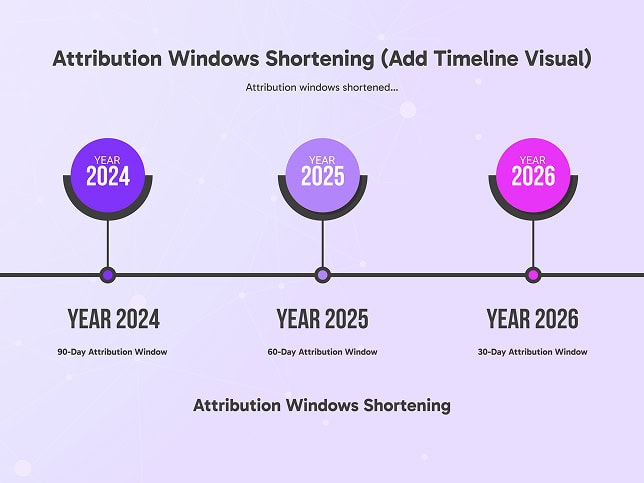
Attribution windows shortened across many programs as brands responded to privacy changes, consent requirements, and increased scrutiny around partner quality. This shift placed greater emphasis on high-intent traffic and transparent attribution models.
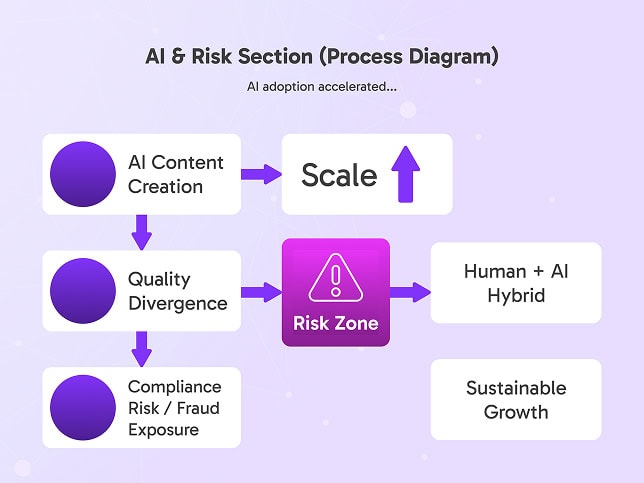
AI adoption accelerated across both affiliates and brands, improving efficiency while simultaneously increasing the risk of low-quality, automated content. Programs that failed to adapt their vetting and compliance processes experienced higher fraud exposure and partner churn.
Compliance and brand safety became defining operational priorities in 2026. More programs proactively removed non-compliant affiliates rather than relying on reactive enforcement, signaling a broader industry shift toward risk mitigation and trust preservation.
Methodology & Data Sources
What this means for 2026:
- Affiliate marketing is no longer optimized through scale alone. Brands and affiliates that succeed are those that prioritize partner quality, attribution clarity, trust signals, and operational discipline.
500K +
AFFILIATE PARTNERS
1.5 BILLION+
CLICKS SENT
$4.5 BILLION+
sales generated
This report is based on aggregated, anonymized data from affiliate programs managed by Advertise Purple, supplemented by third-party industry datasets and internal performance benchmarks. The analysis reflects observed trends across affiliate performance, traffic sources, attribution behavior, AI adoption, and compliance activity.
The dataset includes performance signals from dozens of active affiliate programs and thousands of affiliates, representing millions of tracked interactions and conversions. The geographic scope is primarily United States–focused, with supplemental insights from EMEA-based activity where applicable.
The reporting period covers January 2025 through December 2025, with year-over-year comparisons drawn against historical benchmarks from 2024 and earlier periods.
All benchmarks reflect median or directional values rather than outliers. Client-level performance is not disclosed, and results should be interpreted as ecosystem-wide patterns rather than guarantees.
Limitations include known tracking gaps related to consent loss, partial visibility into AI-influenced discovery paths, and modeled estimates where direct measurement was not possible. These limitations are disclosed transparently to preserve analytical integrity.
The Affiliate Marketing Landscape in 2026
Affiliate marketing in 2026 remained a growth channel, but its internal dynamics shifted significantly. Rather than expanding through an ever-growing number of partners, programs increasingly concentrated revenue among fewer, higher-performing affiliates.
Retail continued to account for the largest share of affiliate-driven revenue, reflecting both consumer purchasing behavior and the scalability of retail-focused partner models. Telecom, media, and travel maintained relevance but demonstrated slower growth and tighter margins.
One of the most notable structural changes since 2024 has been revenue concentration. A growing percentage of total affiliate revenue was driven by the top tier of affiliates, while lower-performing partners contributed marginal incremental value. This trend accelerated as brands responded to privacy changes, attribution tightening, and rising compliance risks.
Privacy regulations and consent requirements did not reduce the viability of affiliate marketing, but they did reduce tolerance for inefficiency. Cookie loss and tracking volatility forced brands to scrutinize partner quality, traffic sources, and attribution models more closely than in previous years.
Performance Benchmarks (2026 Data)
Across verticals, conversion rates remained stable at the median but exhibited wider ranges between top- and bottom-performing affiliates. Retail programs generally maintained higher conversion efficiency, while telecom and travel programs prioritized higher average order values over raw conversion volume.
Commission structures varied significantly by vertical, with retail and DTC programs favoring percentage-based models and subscription-driven sectors increasingly adopting hybrid or fixed payouts.
Earnings per click continued to serve as a more reliable performance indicator than traffic volume alone. High-intent affiliates, particularly email- and loyalty-driven partners, consistently delivered stronger EPCs than content-heavy or discovery-focused publishers.
Attribution windows shortened across many programs, with brands seeking faster, clearer conversion paths and reduced exposure to attribution overlap. Shorter windows placed increased emphasis on affiliates capable of influencing decisions closer to purchase.
Mobile traffic accounted for the majority of affiliate clicks in 2026, but desktop continued to outperform mobile in conversion rate and EPC in many verticals. This divergence underscored the importance of aligning device strategy with funnel stage rather than traffic volume alone.
Affiliate traffic sources in 2026 reflected both diversification and consolidation. SEO remained a foundational traffic driver, but its dominance declined as programs leaned into diversified partner mixes.
Email and loyalty affiliates continued to outperform other channels in terms of EPC and conversion efficiency, reinforcing their role in late-funnel performance. Paid traffic remained present but was more tightly controlled due to rising acquisition costs and compliance considerations.
Social and influencer-driven traffic showed stronger influence earlier in the purchase funnel, particularly when paired with short-form video and platform-native content formats. However, these sources often required clearer attribution models to justify sustained investment.
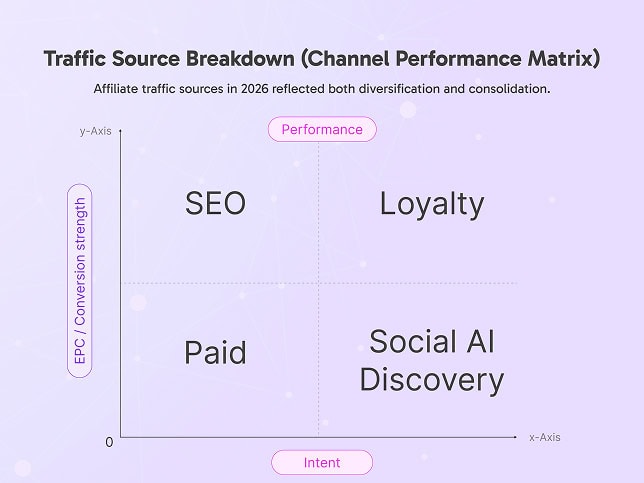
AI-influenced discovery emerged as a growing but difficult-to-measure contributor to affiliate traffic. While affiliates increasingly reported traffic originating from AI-powered search and recommendation tools, isolating direct attribution remained challenging within standard analytics frameworks.
Traditional blog-style affiliate content continued to decline in effectiveness unless supported by strong domain authority, original insights, or demonstrable trust signals. Programs that relied heavily on generic content affiliates saw diminishing returns.
Key insight
- The most undervalued affiliate traffic in 2026 was not new channels, but trusted, high-intent partners operating within existing ones.
AI, Automation & the Affiliate Ecosystem
AI adoption accelerated across the affiliate ecosystem in 2026, reshaping how both affiliates and brands operate.
Affiliates increasingly used AI for content production, research, and conversion optimization. While this improved efficiency and scale, it also widened the performance gap between high-quality publishers and low-trust, automated content farms.
Brands adopted AI-driven tools for affiliate vetting, fraud detection, and performance analysis. These systems enabled faster identification of non-compliant behavior and reduced reliance on manual audits.
Brands adopted AI-driven tools for affiliate vetting, fraud detection, and performance analysis. These systems enabled faster identification of non-compliant behavior and reduced reliance on manual audits.
The most successful AI implementations in 2026 focused on augmentation rather than replacement. Programs that paired automation with human oversight consistently outperformed those that pursued scale without controls.
Compliance, Trust & Risk Signals

Attribution hijacking

Paid search violations

Disclosure violations

Synthetic content
networks
Compliance emerged as one of the defining operational challenges of affiliate marketing in 2026.
A significant percentage of programs reported exposure to affiliate fraud, with common issues including attribution hijacking, misrepresentation, unauthorized paid search, and disclosure violations. Detection timelines shortened as brands adopted automated monitoring tools and stricter partner requirements.
Rather than reacting to violations after revenue impact, many programs proactively removed affiliates that failed to meet compliance standards. This marked a shift from tolerance-based enforcement to preventative risk management.
FTC disclosure expectations and platform policy enforcement increased scrutiny across the ecosystem. Affiliates that failed to adapt their practices faced higher suspension and removal rates.
Brand safety considerations increasingly influenced partner selection, particularly in regulated or reputation-sensitive verticals. Trust became a measurable performance variable rather than a soft consideration.
What Top-Performing Affiliate Programs
Do Differently
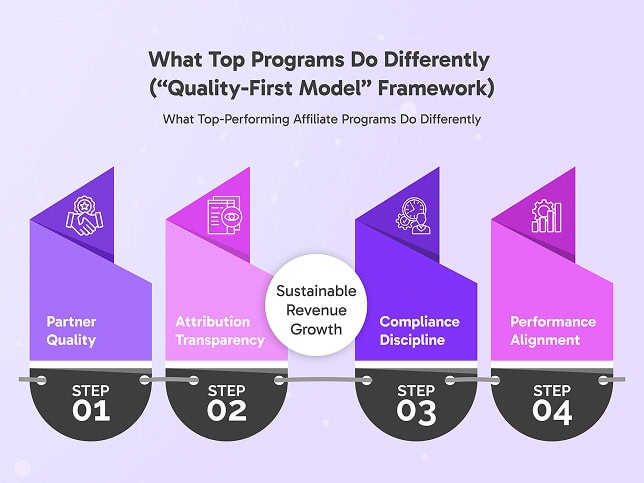
Top-performing affiliate programs in 2026 shared common operational patterns regardless of vertical.
Revenue was more evenly distributed among a smaller, curated group of affiliates rather than diluted across hundreds of low-performing partners. These programs emphasized partner quality, alignment, and long-term value.
Commission structures were clear, competitive, and aligned with performance outcomes rather than volume alone. Incentives rewarded sustained contribution rather than one-time spikes.
Communication cadence was consistent and intentional. High-performing programs maintained regular contact with affiliates, shared performance insights, and provided actionable optimization guidance.
Transparency around attribution, compliance expectations, and performance evaluation reduced friction and improved partner retention. Affiliates that understood how success was measured were more likely to invest in long-term growth.
Data-Backed Outlook for Late 2026 & 2027
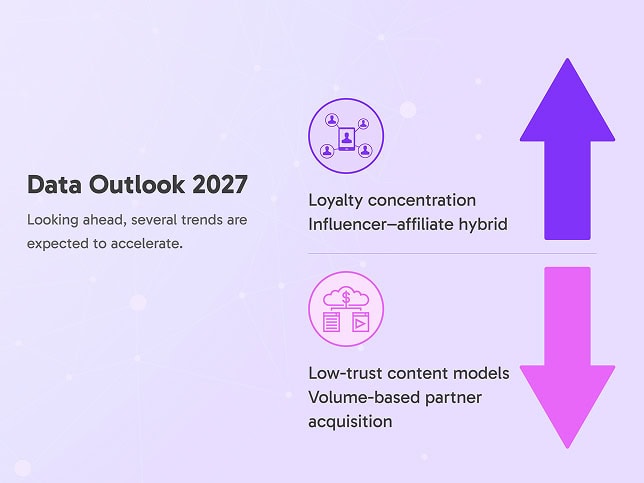
Looking ahead, several trends are expected to accelerate.
Low-trust, low-differentiation affiliate models will continue to decline as enforcement tightens and AI-generated content becomes easier to identify. Consolidation among high-performing affiliates will intensify, particularly in loyalty and email-driven segments.
Short-form content and hybrid influencer–affiliate models are expected to grow, especially when paired with stronger attribution frameworks. Budgets will increasingly shift from broad partner acquisition to enablement and optimization of proven relationships.
Affiliate marketing will remain resilient, but success will require operational discipline rather than scale-driven experimentation.
Actionable Recommendations
For Brands
Brands should audit affiliate partner quality, attribution models, and compliance processes immediately. Programs that continue to prioritize volume over efficiency risk declining ROI and increased exposure to fraud.
Investment should shift toward high-intent channels and partners with demonstrated trust signals. Attribution windows and commission structures should be reviewed to ensure alignment with actual contribution.
For Affiliates
Affiliates should reduce reliance on generic content strategies and focus on formats that demonstrate expertise, trust, and intent. Email, loyalty, and authority-driven content continue to deliver the strongest EPCs.
Automation should be used to enhance, not replace, differentiated value. Affiliates that invest in transparency, compliance, and audience trust will outperform those chasing scale alone.
Key Statistics Summary
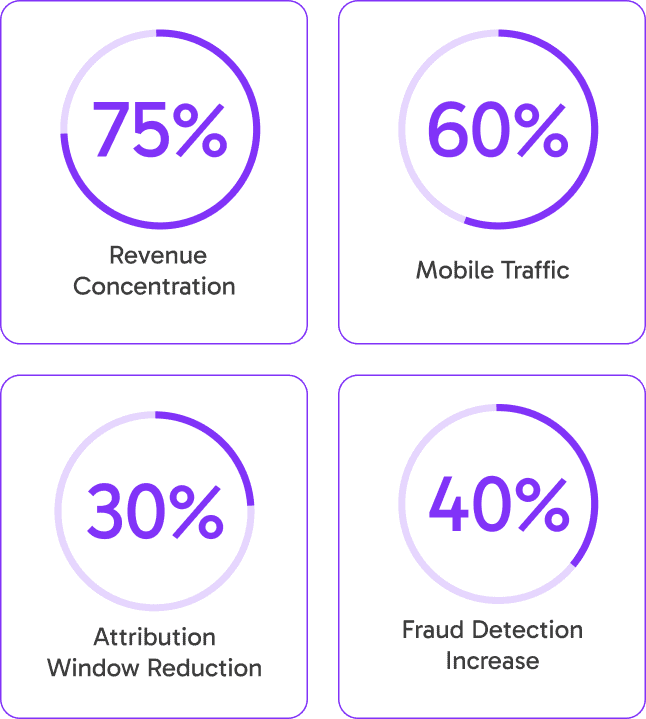
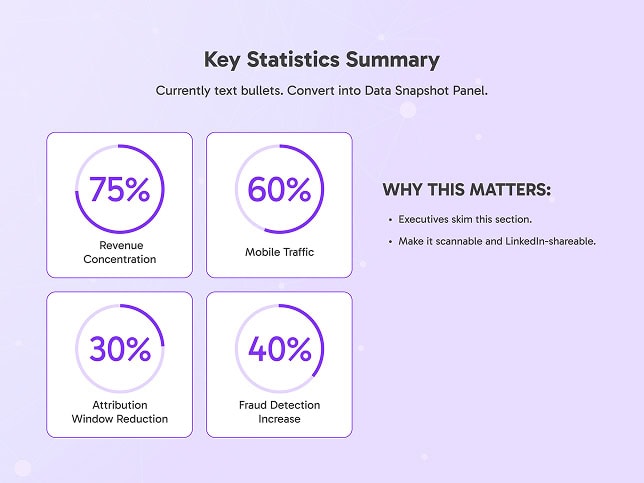
Affiliate marketing performance continued to grow in 2026, but revenue became increasingly concentrated among top-performing affiliates.
Source: State of Affiliate Marketing 2026, Advertise Purple. Data aggregated January–December 2025.
WHY THIS MATTERS
- Mobile dominates volume, but desktop drives higher EPC – optimize both to avoid leaving revenue on the table.
- Shorter attribution windows and proactive fraud removal mean quality partners now outperform volume-based affiliates.
Why 2026 Redefines Affiliate Marketing
Affiliate marketing in 2026 marked a structural turning point. Growth continued, but the path to performance narrowed. Programs that adapted to heightened scrutiny, attribution clarity, and partner quality emerged stronger, while scale-driven models showed diminishing returns.
Across performance, compliance, and technology, the same pattern held: trust is no longer optional. As the ecosystem moves into 2027, affiliate marketing will reward discipline, transparency, and long-term partnership over volume and velocity.